
$50.00 – $75.00Price range: $50.00 through $75.00
Contents: GHK-Cu
Form: Lyophilized Powder
Purity: ≥ 99% pure
Emerging Research Evidence:
Anti-aging, antioxidant, skin regeneration, accelerated wound healing, increases collagen & elastin production, stimulates hair growth and reduces inflammation.
Keep product in cool, dark place.
Sold for Research Use Only / Not FDA Regulated
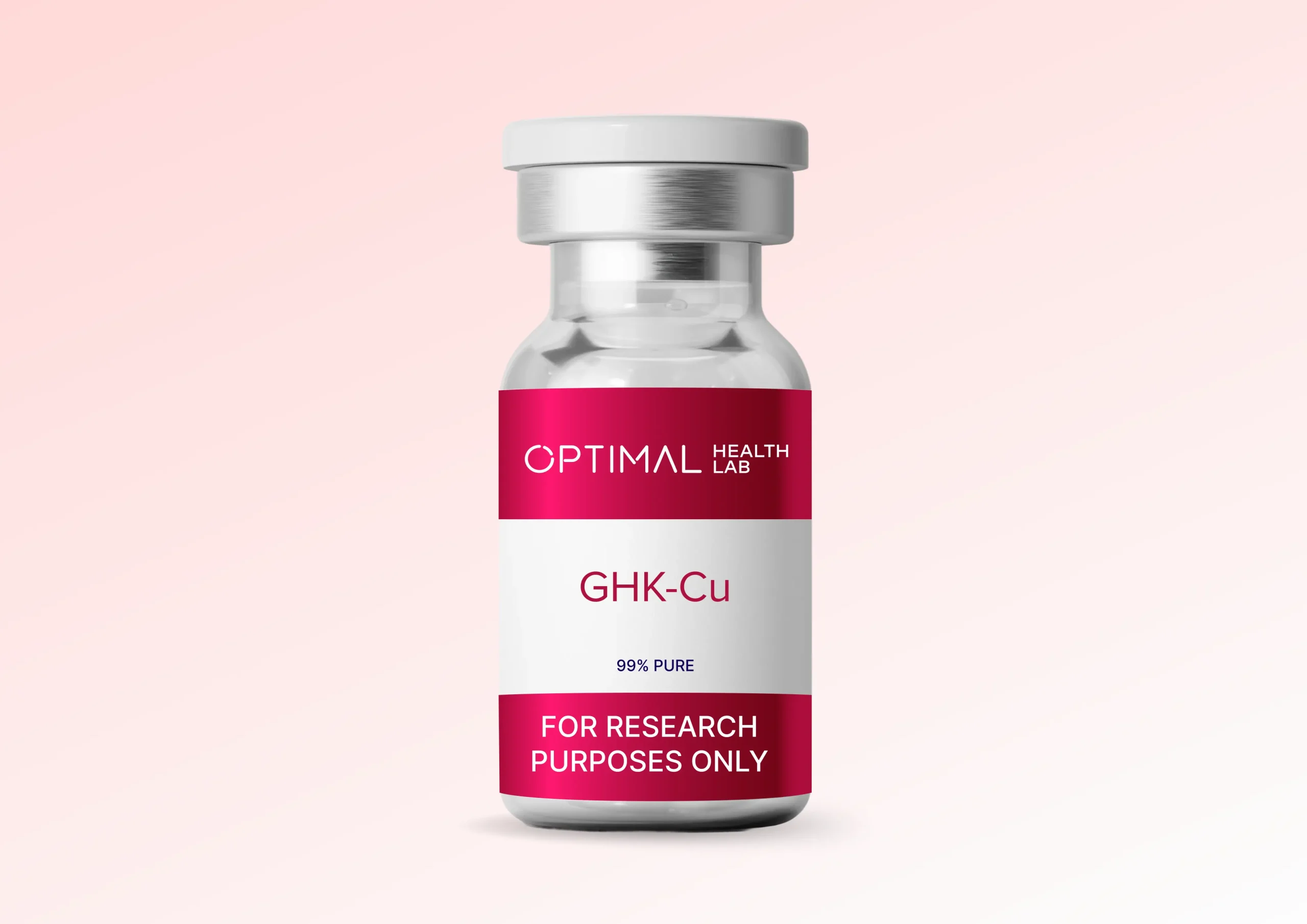
GHK-Cu Overview
Copper peptide GHK-Cu (INCI: Copper Tripeptide-1) is a well-researched compound commonly used in anti-aging and hair restoration formulations. Clinical studies have demonstrated its ability to stimulate collagen and elastin synthesis, accelerate wound healing, and strengthen the skin barrier while offering antioxidant protection against environmental and oxidative damage.
GHK-Cu functions by modulating gene expression to support cellular repair and reduce inflammation, resulting in a more youthful, resilient appearance. Beyond cosmetic applications, it plays a crucial role in cellular regeneration, DNA repair, and tissue remodeling, positioning it as a key focus in ongoing regenerative medicine and anti-aging research. Research is ongoing and the claimed benefits are still emerging.
GHK-Cu Structure:
CAS Number: 89030-95-5 (Copper tripeptide-1)
(Parent ligand GHK: CAS 49557-75-7)
Molecular Formula (GHK-Cu complex): C₁₄H₂₄CuN₆O₄
Molecular Weight: 403.92 g/mol (GHK-Cu complex)
Parent Compound: GHK (glycyl-L-histidyl-L-lysine)
Monoisotopic Mass: 403.1155 Da (GHK-Cu complex)
Synonyms:
Research Areas:
Research-only note: GHK-Cu is not FDA-approved for therapeutic use; published effects are primarily preclinical and exploratory.
| Size | 50mg, 100mg |
|---|
For Research Use Only — Not for Human or Veterinary Use. Not evaluated or approved by the FDA. Not intended to diagnose, treat, cure, or prevent any disease. All information on this website is provided strictly for laboratory research and educational purposes. Nothing herein constitutes medical, clinical, or legal advice, nor an endorsement of non-laboratory use. Any discussion of specific peptides or potential research findings is informational only and must not be interpreted as guidance for use in or on humans or animals.